I was skimming Jeff Tiedrich’s latest email, about Trump and his Bible sale, when I came across this quote from Christianity Today:
And therein lies the most alarming concern we share about this “American Bible.” It promotes the myth of an American exceptionalism that is founded on God blessing this nation in a way that God has not or does not blessed other nations.
There are two auxiliary verbs in there, not separated by commas, and that’s okay, except that what follows is totally screwed up. The auxiliary verbs in question are “has not” and “does not.” But they’re separated by the word “or.”
What the authors are trying to say is “…God has blessed other nations” and “…God does not bless” other nations.
“Has blessed” is past tense. “Does not bless” is present tense. You can’t just shove those two together and then use the past-tense “blessed” for the verb.
If you look around the internet, you’ll find that most people just use the verb form that relates to the subject, or in this case the auxiliary verb, that is closest to it. So, they’d say “Martha or her parents don’t want the pie, but I’m not sure which.” This could be grammatically correct. I’m still trying to figure it out. If you put that sentence into Pro Writing Aid, it says that’s just fine.
Or, they’d say, “Martha has not or does not eat spinach.” And everyone assumes this is just fine. Pro Writing Aid says it’s just fine.
But it’s just wrong. Wrong, I tell you!
And when you try that with our little wowzer of a sentence: “God has not or does not bless other nations”–Pro Writing Aid tells you to put a comma before and after “or does not” and then tells you “bless” is wrong.
So, it’s just wrong.
You can’t put two different tenses of an auxiliary verb together and then use only one tense of the verb. You can’t say “…God has not or does not bless other nations.” And you can’t say “…God has not or does not blessed other nations.”
You could separate the offending auxiliary verb with dashes: “…God has not–or does not–blessed other nations.” At least, Pro Writing Aid doesn’t flag it. But if you ask me, it’s still wrong.
The only way to fix it is to say: “It promotes the myth of an American exceptionalism that is founded on God blessing this nation in a way that God has not blessed, or does not bless, other nations.”
There! I fixed it for them.
I am not going to read all of their article. Based on this sample, I don’t think I could handle it.
Last weekend, we visited Sea World for their Seven Seas Food Festival. We do the Epcot Food & Wine Festival every year, but this is only the second time we’ve done Sea World’s. Hubs, after our first time, dubbed Sea World’s festival the winner. I wasn’t so enamored with it. And this second visit has me declaring Sea World a definite second-place effort.
Let’s start with parking to get into the park: $34.08! $32 + tax!
We were shocked! You can tell by all the exclamation points. But, as it turns out, parking at Disney is $30. So it’s close. But still. Sea World is not Disney. Who do they think they are? It’s almost like they don’t want us to go to the park.
Then we found that the prices of their samples were all $10.99 or 11.99! Even the dang doughnut! It was ridiculous. Unfortunately, I don’t have the exact price for each item, like I do with Epcot. We purchased a 10-sample lanyard for $70. So, each of our samples cost only $7. You MUST get the lanyard if you plan to go. Of course, then you’re forced to try ten things.
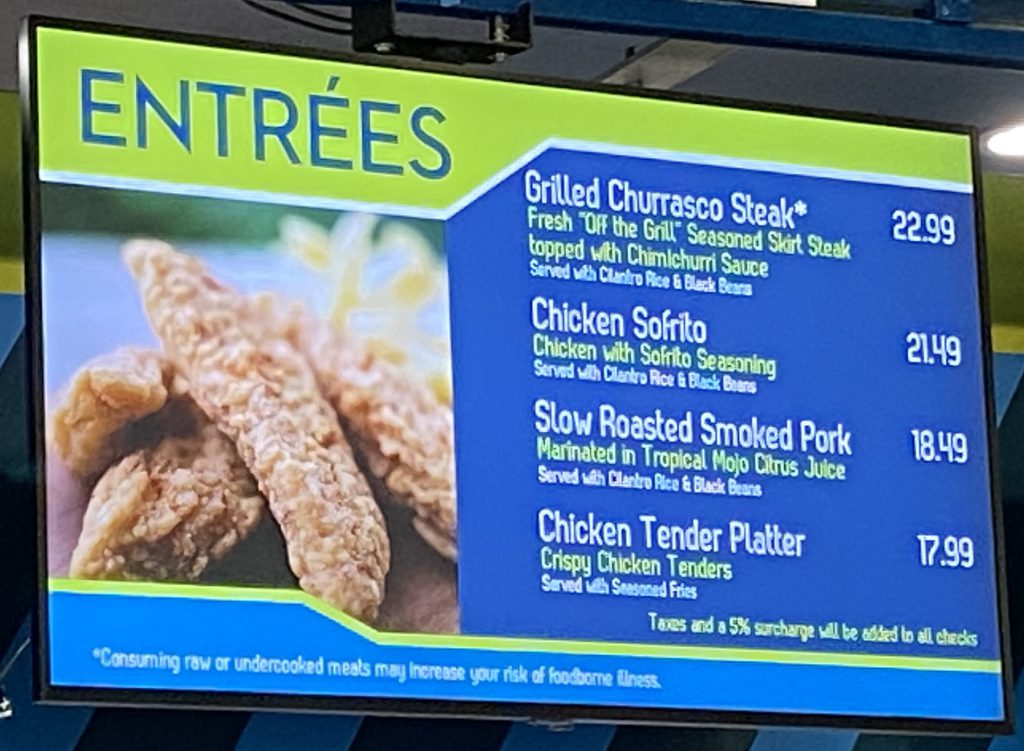
If you think the samples are expensive, take a look at the prices in their restaurants.
And this isn’t some fancy, sit-down, get waited on restaurant. It’s your typical fast-food, counter-ordering, hope there’s a seat available restaurant.
Okay, enough complaining about this stuff. Let’s complain about the food!
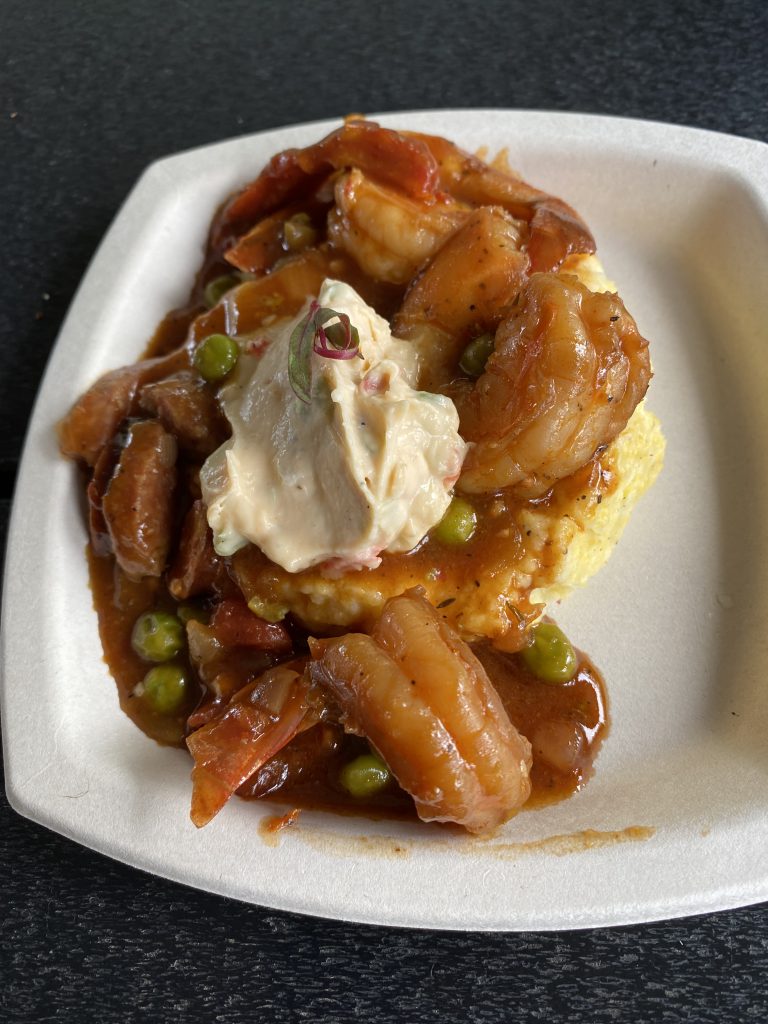
Shrimp & Grits!
Our fist stop was the Gulf Coast Market for “Cajun Shrimp and Grits.” The description says “Cheddar Stone Grits, Royal Red Shrimp, Andouille Sausage, Roasted Tomatoes, Green Peas”
Well, I’ve had shrimp & grits before and I have to say, this dish was very mild by comparison. And they put the word “Cajun” in the title! You see “Cajun” and you expect flavor. Lots of flavor. But here, the grits were bland. I don’t know what the dollop of sauce is on top in the picture, nor what the reddish brown sauce is, but they were bland. The shrimp was tender and tasted like shrimp. The sausage was flavorful, if mild.
Overall, it was okay, but I’d be disappointed if I ordered shrimp & grits in a restaurant and got this.
Next stop Mexico for a “Taco al Pastor.”
Described as “Chipotle Ancho Adobo Chicken, Pineapple, Cabbage, Onion, Cilantro”
What it tasted like was BBQ and onion. It was okay, but needed more flavor.
Brazil was next for the Galinhada.
“Marinated Chicken Thigh, Saffron Rice”
The chicken was…chicken. You know, not much flavor. It should have been spiced and/or marinated. Anything for some flavor! And the rice had no flavor at all. But the chicken was moist and the taste of chicken by itself is actually pretty good. And the dish was warm. So, it was okay.
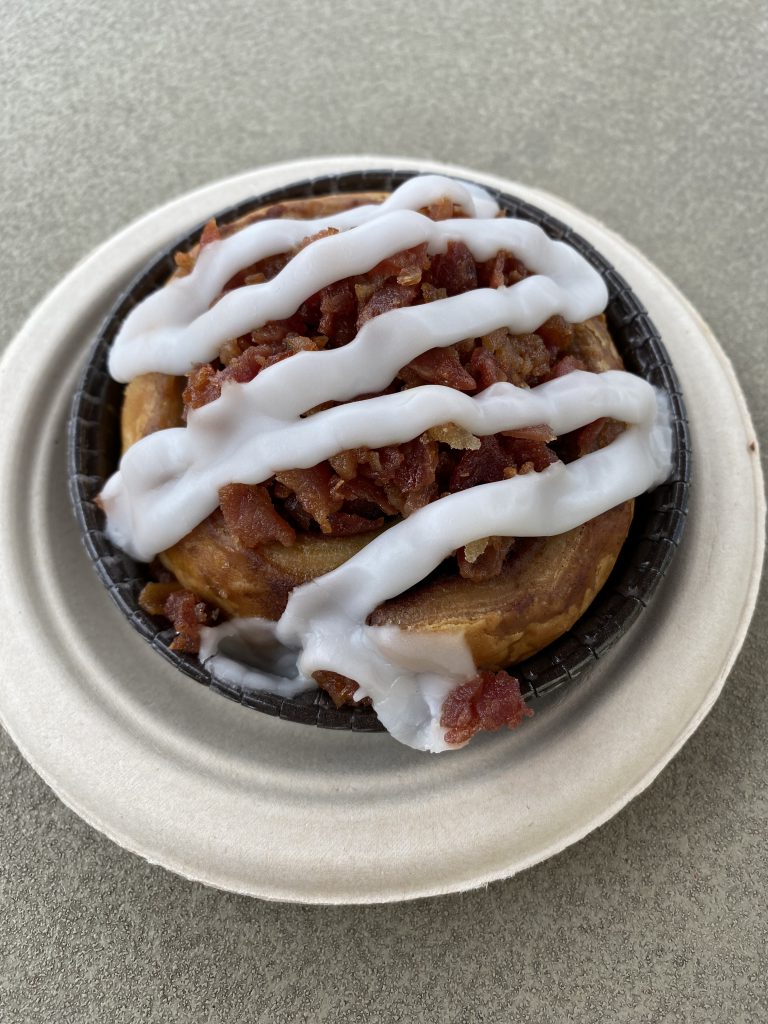
Then we went to Cafe de Mar for a much anticipated Whiskey Bacon Cinnamon Roll.
I was ready for it, anyway. Hubs isn’t a fan of bacon.
Alas, it was awful.
The description reads, “Topped with Whiskey Maple Glaze.” (Sea World really needs to do better with the descriptions.)
As it turns out, I am not a fan of “whiskey bacon.” I thought I’d love whiskey. Maybe I would, just not on bacon. And I LOVE bacon. But the whiskey, in this case, ruined it. I actually shuddered from the horror of tasting it. And when I took a bite of just cinnamon bun, I was shocked at how little sugar was in it. Was there any sugar in it? This was a BIG no.
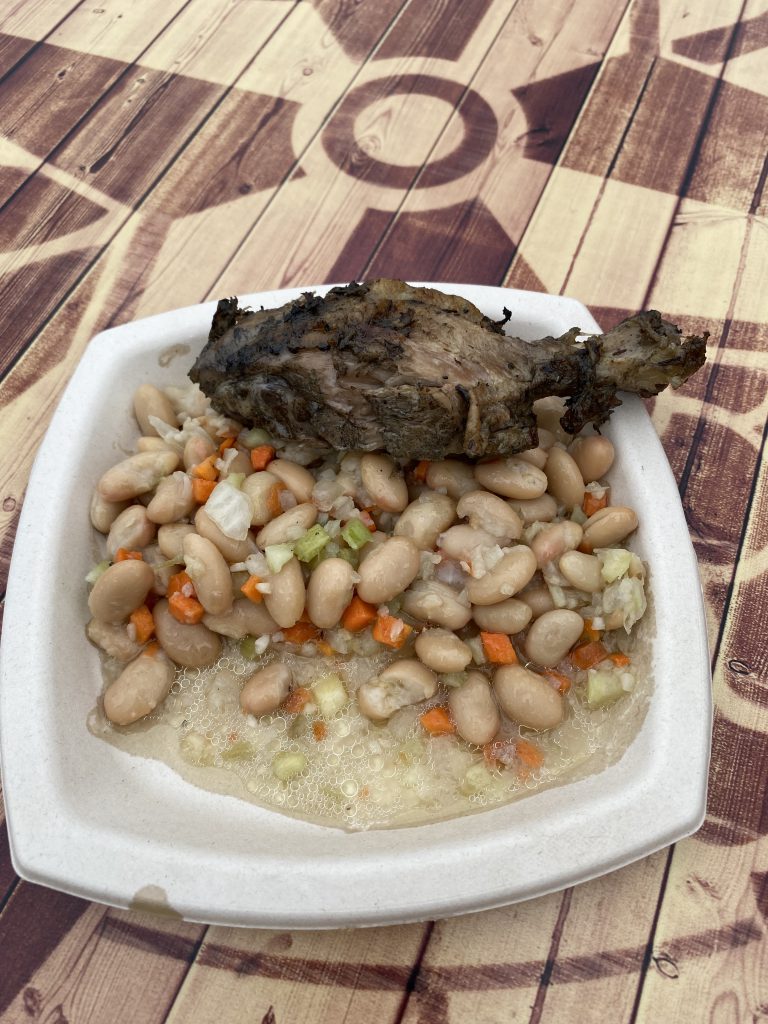
Let’s talk duck. Ever since I had a turducken one Thanksgiving, I’ve been chasing that wonderful duck flavor. I guess duck only has flavor if it’s wrapped around a chicken and stuck inside a turkey. Because this duck could have been chicken for all its lack of flavor.
Described as “Duck Confit–Served with Tabais Beans.”
I don’t know what Tabais beans are, but they have no flavor, at least in the way they were prepared in the “France” booth.
There was, I will admit, something crunchy in the beans that had some flavor. I’m pretty sure it was celery.
Off to the All American Market for some fried pickles.
Oh my. Not what we were expecting at all. Very pickle-y. Too pickle-y. Hubs described it as “McDonald’s burger and fries all in one bite.” Yeah, that was pretty much it.
I don’t recall what the sauce was, but it was offered as an option and we chose to have it on the side. It’s not mentioned in the description. In fact, this dish had no description at all, besides: “New!”
I wouldn’t eat it again.
Next up, Sweet Sips for the Choco Loco Cupcake.
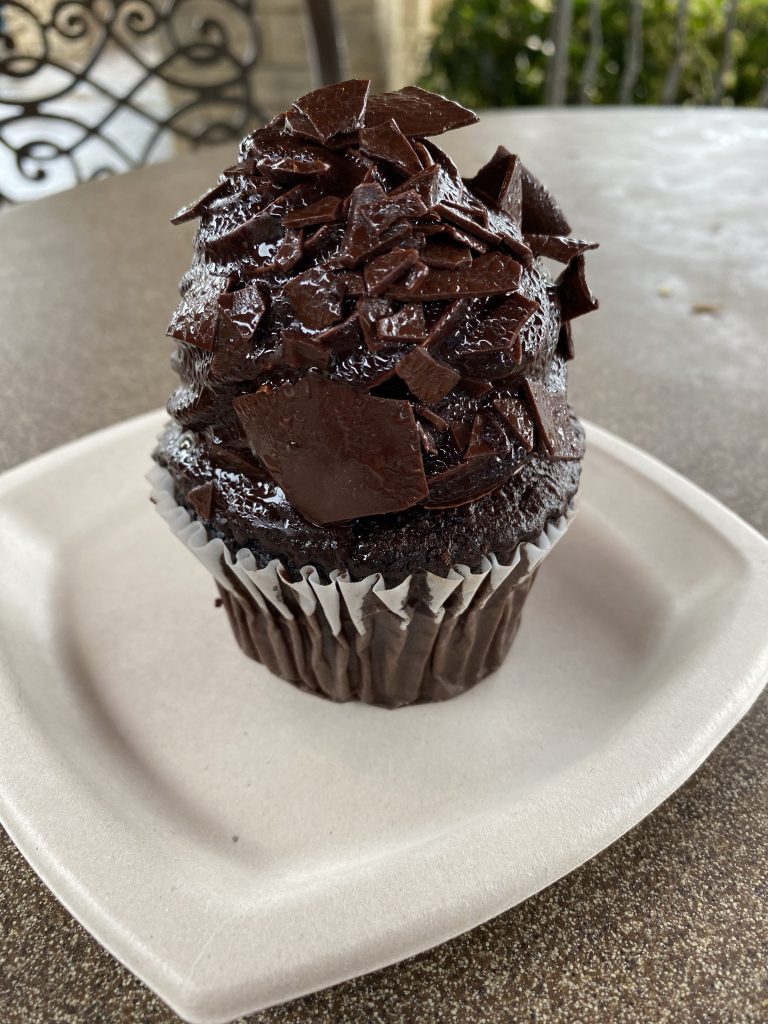
There’s no way for anyone to screw up “Chocolate Cupcake, Chocolate Fudge Icing, Chocolate Whipped Topping, Dipped in Chocolate” right?
Dear god they managed to do it!
And how did they screw this up? By keeping it in a refrigerator. All that moisture you see in the picture…that’s condensation.
Everything on top was amazing! But the cupcake itself was hard, dry, dense, and flavorless. It’s possible if we’d let it thaw a bit, it might have been better, but I’m thinking once you dry out a cupcake into bits of cardboard, it’s game over.
Shame. But we ate all of it.
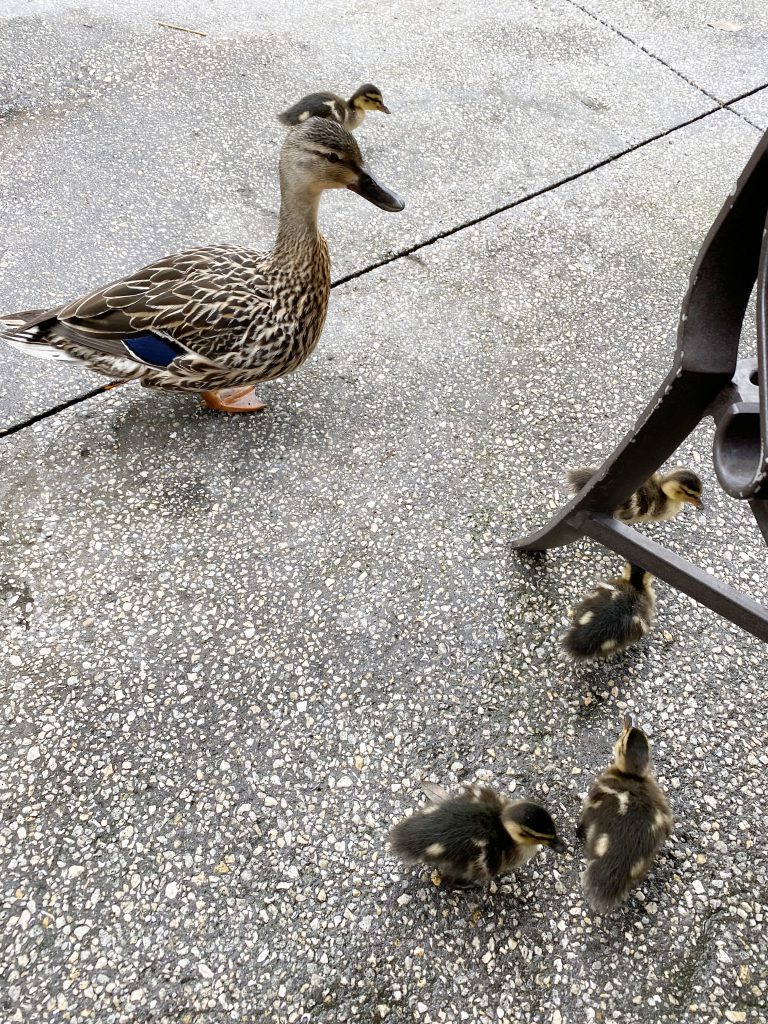
And as we ate our cupcake, we were visited by a mama blue-winged teal and her ducklings!
Then we were off to get some non-sweet food because we were on a raging sugar high. We got the Walking Gyros at the Mediterranean Market.
Described as “Pita Chips, Tomatoes, Red Onion, Tzatziki Sauce.”
Well, I was confused. What is walking about this dish? I didn’t eat many of the chips. They were pretty thick. The tzatziki sauce was way too mild. Not the tzatziki I’m familiar with. But the meat was very tasty, so, overall, I enjoyed the whole thing. Unfortunately, in the end, all I could taste was salt.
And what do you crave after a salty snack…if you’re me? Sweets! So we were off to the Irish Market for the “Jameson Donut–Chocolate Jameson Mousse, Chocolate Icing, Candy Orange.”
There was no “candy orange” so far as we could tell. But it tasted like a donut, even though it–like the cupcake–was refrigerated and therefore dense and tough. The Jameson Mousse in the middle was really tasty, and really sparse.
I liked it, despite the texture, which says a lot more about me than it does about the donut.
Last but not least, and the dish we attempted to eat first shortly after 11:00 when the food festival was supposed to begin only to find that the whole thing just sort of stumbled along to an opening sometime between 11:00 and 11:20:
Once again, flavor was hard to find. Alone, the dumplings were very dry. Much better with the bits of grass and peppers on top. The sauce tasted okay, but was, as you expected no doubt, lacking in flavor.
So, we ate a lot of flavorless dishes and a couple of tasty desserts.
My total takeaway is “large portions of bland foods.” I think Epcot’s Food & Wine Festival is much better. Hubs, on the other hand, still feels like Epcot’s is phoning it in. I guess the battle of the food festivals will continue…
The title of this post is definitely a question. But today, as I was reading about the so-called royal across the pond and her cancer diagnosis, I came across a misplaced question mark. And this happens all the time. I find it maddening.
The question of what happened to Catherine, Princess of Wales turned out to be, in the end, a question of what you think you are owed by the British royals?
Let’s leave aside the lack of a necessary comma after the clause “Princess of Wales” and the repetition of the word “question” and look at the question mark at the end. This is not a question. It’s a statement about a question. Just because you’re talking about a question doesn’t mean you put a question mark at the end.
So, an otherwise lovely article defending the privacy of a public figure has turned into a nightmare. In my opinion, anyway. And seeing this mistake made me pay more attention to the rest of the article, in a bad way.
The author continued to refuse to put a comma after Catherine’s title, “Princess of Wales,” which was unnerving. And as for major goofs, the article didn’t disappoint. The final paragraph contained this monstrosity:
And anyway, when I watched Catherine, Princess of Wales — a woman who had to interrupt her cancer treatments and her family tending to get her hair done and put on makeup and prove to the world that she was not dead, not a body double, not leaving her husband, not growing out a bad haircut, just sick — when I watched her give us her bad news, what I thought wasn’t that she should have told us sooner.
Family-tending should have been hyphenated there, of course, for clarity. But that’s not the only problem.
When you use two dashes to insert a clause, what comes before and after those dashes has to be a complete and sensical sentence. In this case, the sentence interrupted by the clause is this:
And anyway, when I watched Catherine, Princess of Wales when I watched her give us her bad news, what I thought wasn’t that she should have told us sooner.
And look! Still no comma after “Princess of Wales!”
Central Florida couldn’t decide if it wanted to be hot or chilly, sunny or rainy, on the Friday we visited EPCOT for their annual food & wine festival. Luckily for us, the brief rain happened while we were in a very long line indoors.
This year, many of the booths boasted some new offerings, which was nice. But, we can usually only fit in ten to thirteen items before we stagger to the car (from too much food, not wine or beer) and head home, so we couldn’t taste them all. We only go for things that sound like we might actually enjoy them. It’s not cheap, after all.
So, what did we eat? Was it any good? Let’s dig in.
First stop: Mexico!
All three of Mexico’s offerings were new this year. We tried the Taco de Costilla: slow braised beef short rib on a corn tortilla with salsa de chile Morita, avocado mousse, and spring onions. I was really looking forward to the avocado mousse. Unfortunately, there was very little of it. But what I could find was lovely. The entire dish was tasty, if a bit on the salty side.
Stop number two: China!
New at China this year was the crispy duck bao bun with hoisin sauce. It looks like a mouth with its tongue hanging out!
We’re not super fans of the bao buns but this one was pretty good. The duck was not crispy at all, however, and was, in fact, a thick slab of tastelessness. Very disappointing. Duck is a pretty tasty meat, so I don’t know what the problem was except that, perhaps, it wasn’t really duck. The sauce was really sweet and not terrible. Hubs found it all too salty, but I thought the sweetness of the sauce counteracted the saltiness for a nice balance.
On to number three: Italy!
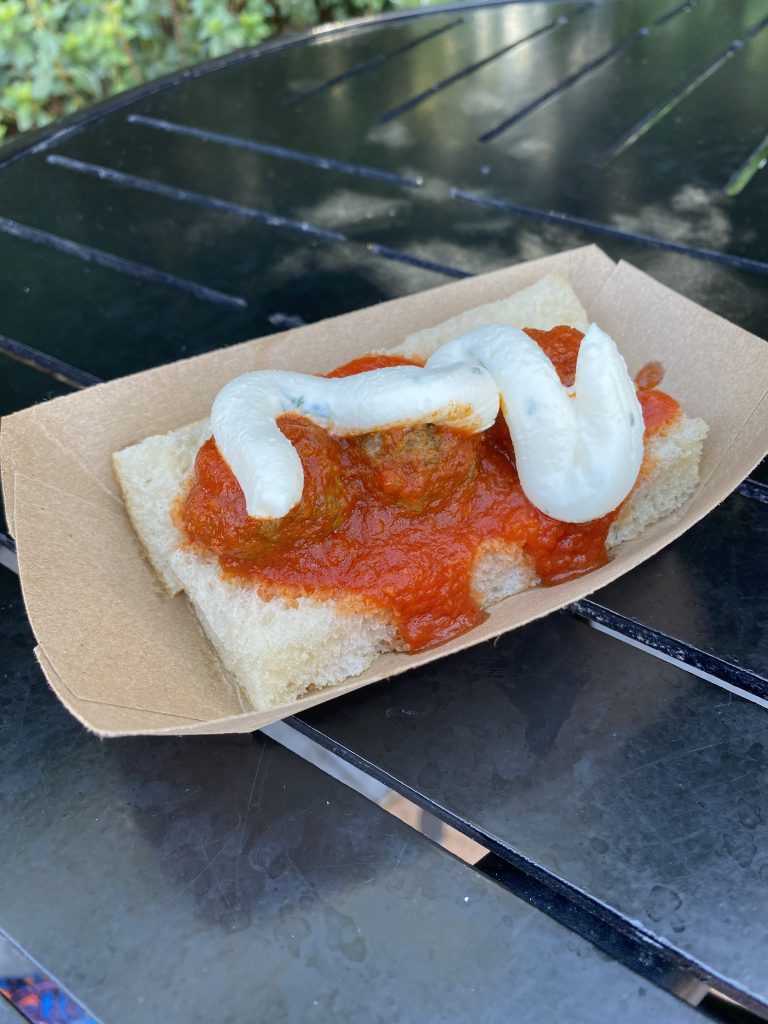
We were excited about Italy. We’ve skipped it in years’ past because we’d tasted it all before and it tasted like Chef Boyardee. This year, all three offerings were new. We skipped the sausage ragout because Hubs doesn’t like sausage. I’d have gone for it but I had so much left on the list, I didn’t mind skipping it. So, what did we get?
I thought the sauce was a step above Chef Boyardee, but Hubs words were along the lines of: “Well, I guess it’s good to know that Chef Boyardee really is authentic Italian food.”
And for a bit of dessert…
Lemon ricotta cheesecake with vanilla cream and strawberry compote. Yummy! This was fabulous.
Number four: Japan!
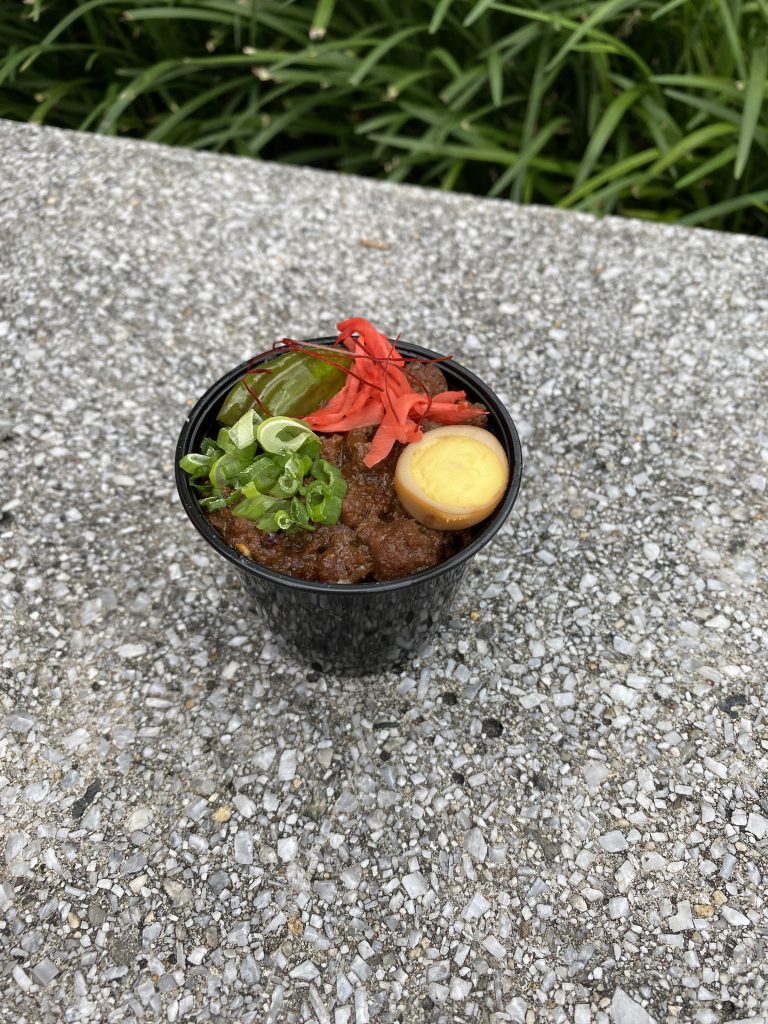
We chose one of their new offerings here: the beef Wagyu don (don means bowl). So, a rice bowl with American Wagyu beef (hint: that means it’s not really Wagyu) over steamed (sticky) white rice. It was topped with what we think were pickled carrots which were super strong in flavor; a tough piece of pickled okra that tasted nothing like okra ought; a slice of tough boiled egg; and some bits of (maybe fake*) saffron. We decided this dish could be dubbed Japanese Shepherds Pie…in a bowl. A very tiny bowl.
*I say fake saffron because…come on. Saffron is really expensive. I tasted a bit of it by itself because I wanted to know what saffron tastes like. I still don’t know what saffron tastes like because it had no flavor.
Overall, though, a pretty tasty dish.
On to number five: Flavors of the Medina!
Wait, what?
Some of the offerings were at permanent locations in EPCOT, as opposed to the booths. This one was in the Tangierine Café in Morocco.
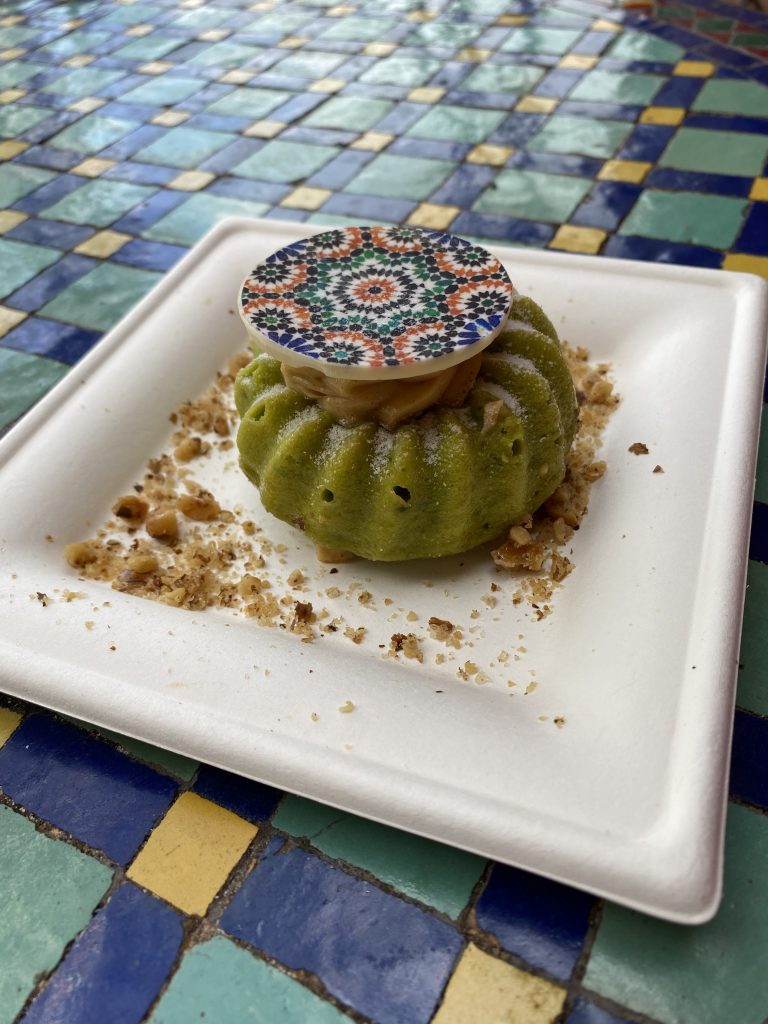
Here we had the pistachio cake with cinnamon pastry cream and candied walnuts. Heaven on a plate! The cinnamon overwhelmed the flavor of the pistachio cake, but if you got a bite without it, the pistachio came through wonderfully. There was a decorative piece of white chocolate on top. Very nice!
Next up: Ireland!
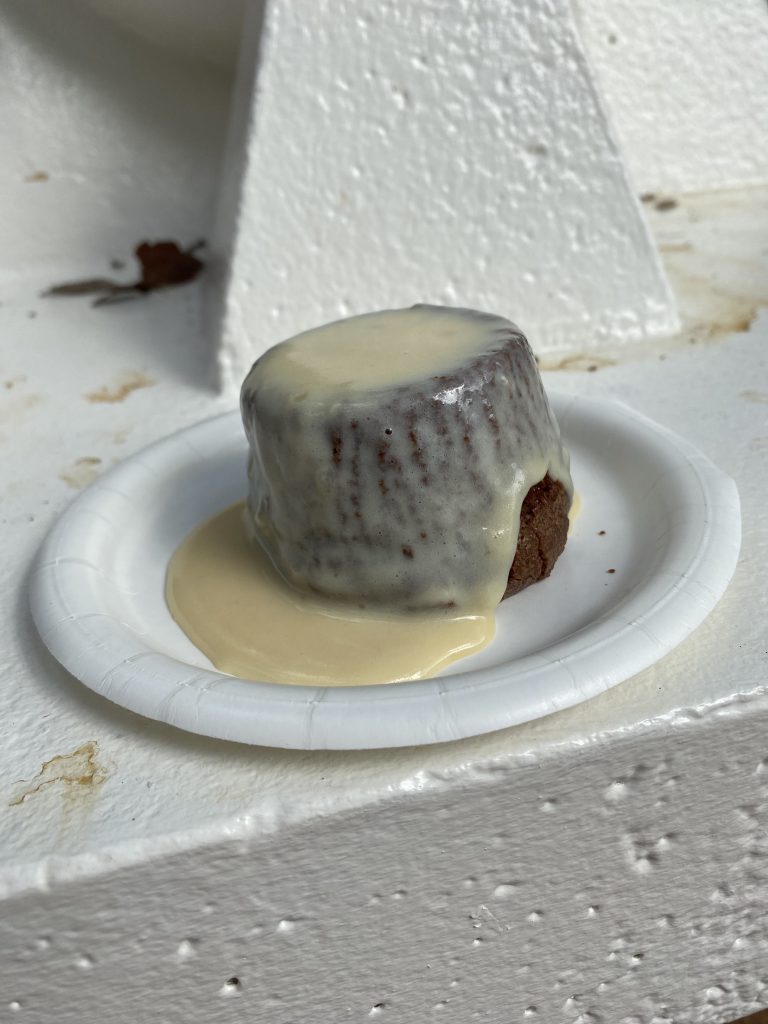
Our sixth stop was Ireland for the obligatory warm chocolate pudding cake with Irish Cream Liqueur custard. Hubs was going to let me eat this all by myself but I insisted he help. It’s huge! Honestly, I didn’t find it as chocolatey as it looks. I might consider skipping it next year.
Stop seven: Flavors from Fire!
Yeah, they have these booths that aren’t linked to countries at all. It seemed wrong when they first started, but we’re okay with it now. So here we got their two new offerings.
Chimichurri marinated skirt steak taco with crushed avocado, grilled corn salsa, pickled red onions (more like a wide slice), queso fresco and cilantro-lime cream. This was pretty good. Loved the avocado.
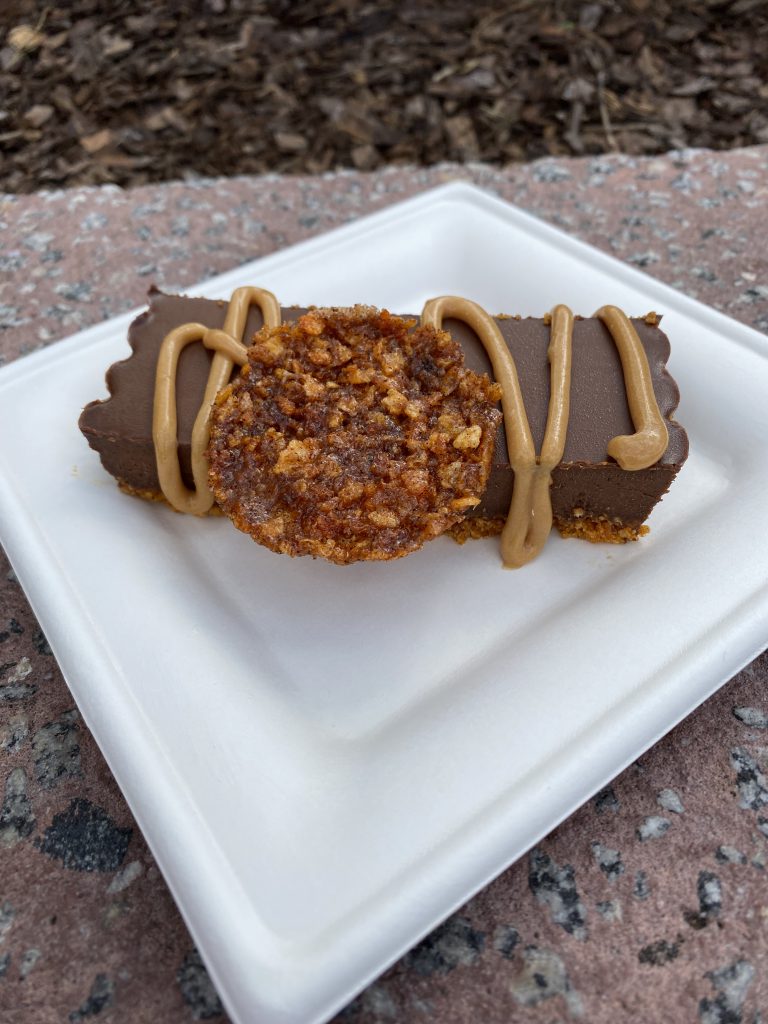
Spiced chocolate tart with BBQ potato chip crust, salted whiskey caramel, and smoked sea salt.
So, picture me, carrying this plate with a huge chunk of chocolate on it, beaming, salivating! I was in heaven. I was going to eat this whole thing. Hubs would be lucky to get one bite. Alas.
Nope. Just no.
My god when will people stop ruining chocolate? It was way too spicy. To the point of being disgusting. And that chip on top? Oh, my god, I tasted it and nearly spit it out. Bitter and gross.
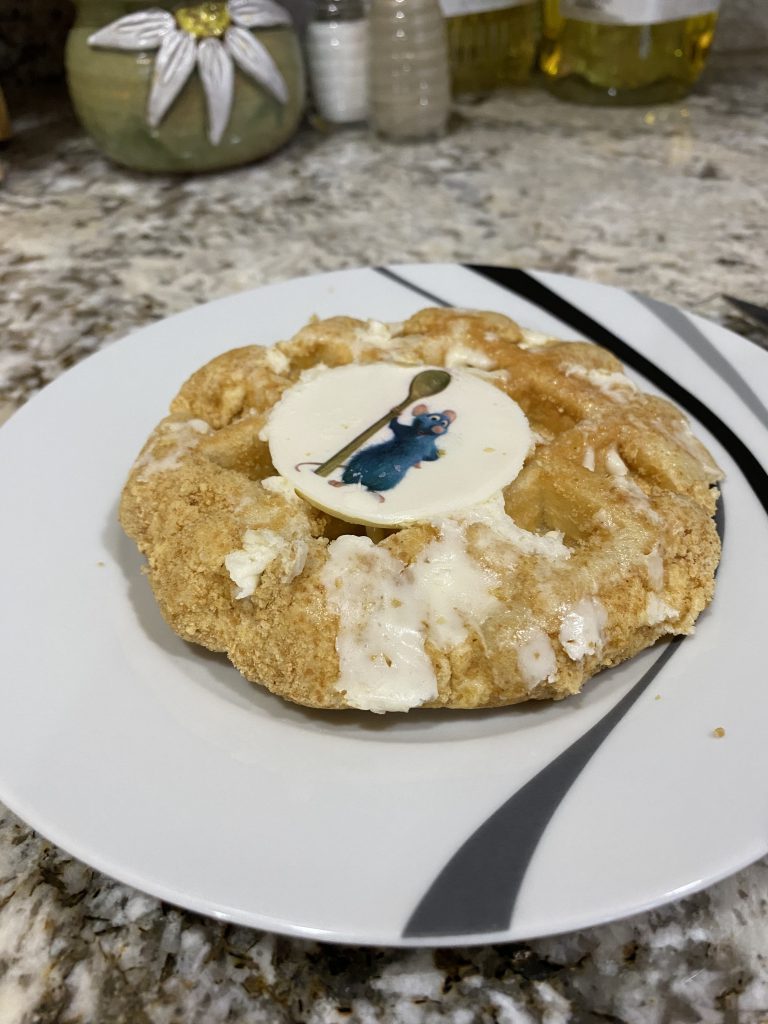
Now, stop eight was technically at the Connections Café for a Remy Liege waffle. A cream cheese Liege waffle with cream cheese icing, graham cracker crumbs and a Remy chocolate garnish.
The Belgian waffle, as we know it in the US, is actually an americanized [sic] version of the Brussels waffle, a batter based waffle. Pearl sugar waffles, aka Liège waffles, are quite different and are made with a yeast based brioche dough studded with special pearl nibs of sugar that caramelize on the waffle iron as it cooks.
The Connections Café is basically a Starbucks. It was the longest line we waited in (the second longest was for Japan). And as we got closer to the counter, we realized two things.
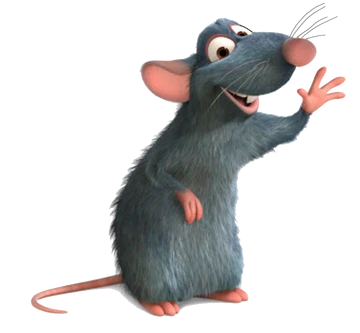
One: Remy chocolate is not some kind of fancy European chocolate. It’s a piece of white chocolate with a picture of Remy on it. Oh, that’s right. We finally realized that Remy is the name of the rat in Ratatouille.
And two, the waffle wouldn’t be served on a plate, but in a little plastic pouch. So we decided to take the waffle home and try it there. One less thing to fill us up, right? So, we’ll get back to the waffle at the end.
While we were in line, we passed a refrigerated case and I grabbed a bottle of Diet Coke. When we purchased our Remy waffle and very expensive Diet Coke, I asked for a cup of ice. The cashier asked for my name, wrote it on the side of a cup, and passed it to someone. There we were, standing in a group of wired coffee fanatics, waiting through the shouts of “Carla! Iced, Ristretto, 10 shot, venti, with breve, 5 pump vanilla, 7 pump caramel, 4 Splenda, poured, not shaken!”* for my little: “Donna! Cup of ice!” That’s right. They got my name wrong.
*I got that from the Internet.
Stop nine: Greece!
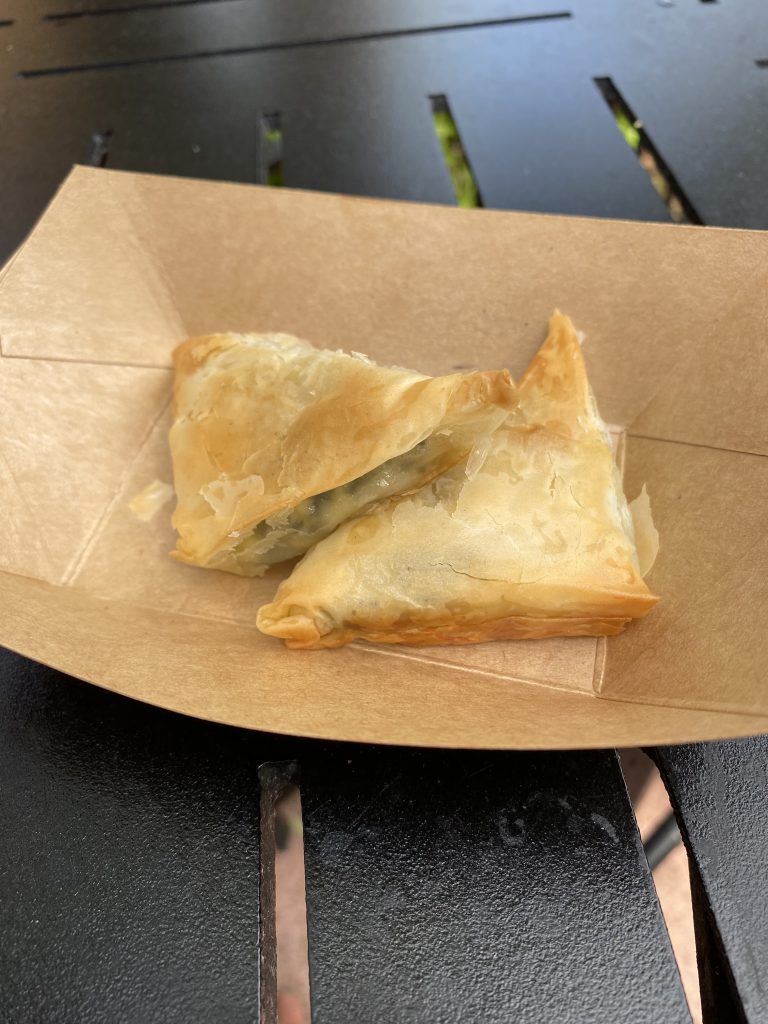
We got the spanakopita (basically a spinach/cheese pie) because I always think I’m going to love it. And it was cheesy and comforting. But it was also too greasy. I might try to make some myself sometime and see how it turns out.
Next stop: Flavors of America!
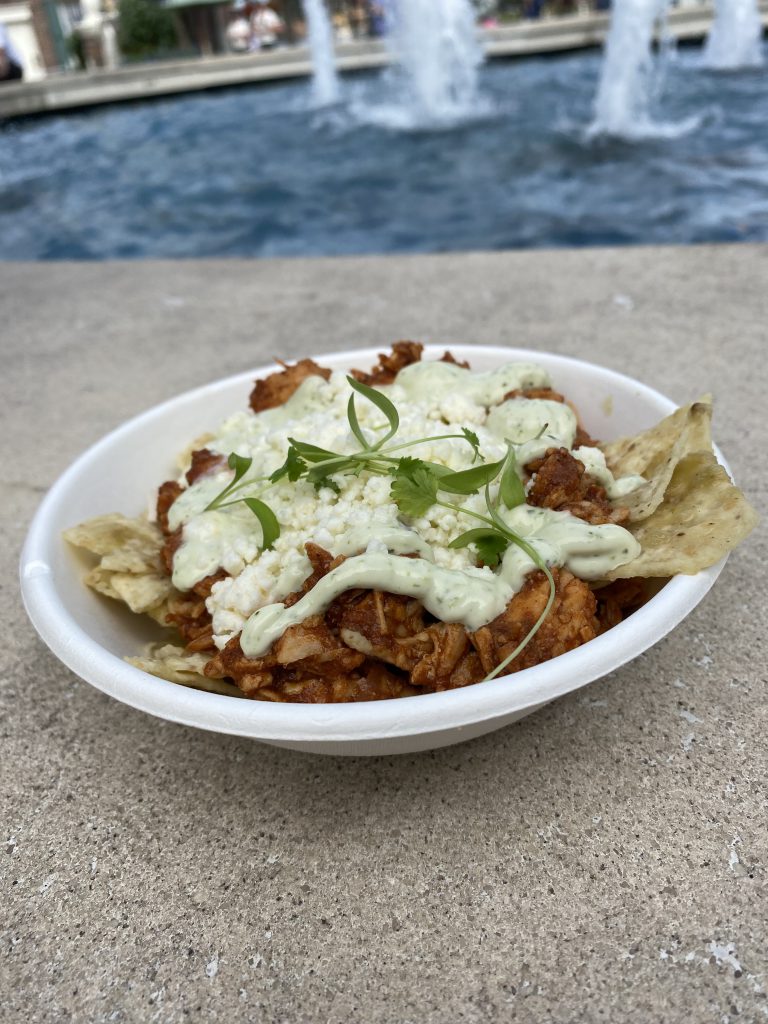
Everything was new this year at the America booth, except for the carrot cake. We chose the Chilaquiles: corn tortilla chips tossed in a salsa verde with ranchero chicken, queso fresco, cilantro-lime crema and a soft poached egg.
Well…we expected this to be like nachos, but the tortilla chips were very soggy and had to be eaten with a fork, which wasn’t an easy thing to do. We found an egg shell in it! Chef Ramsay would be appalled. While this was very tasty, the soft poached egg was pretty close to raw. It was pretty gross so we avoided it.
Stop eleven: Germany!
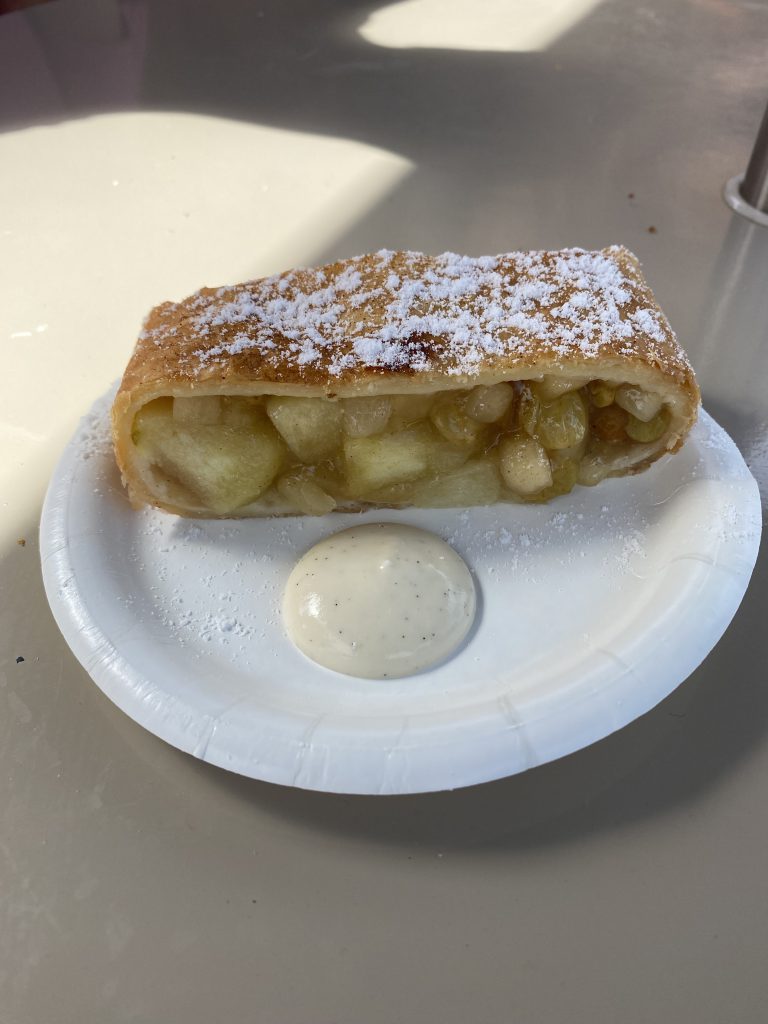
We decided to indulge in the usual apple strudel with vanilla sauce. It’s always a pleasure. Mild in flavor, not super sweet like American apple pie. And it’s got grapes in it. We think they’re cute.
And that was it! We couldn’t eat another thing, so we went home. And I found my Remy waffle pretty smashed up in my purse. After a few hours of digesting, I gave it a try.
Fresh out of the bag at EPCOT, you would have seen distinct lines of drizzled cream cheese icing across the top.
My reaction was to ask Hubs if it was possible for something to be too sugary sweet and yet, not very sweet at the same time. The cream cheesy parts were lovely, and the crust parts were sugary. The white chocolate was delicious. All in all, it was much too sweet to eat the whole thing.
Many of the prices were a bit higher this year. Some seemed very high. The Wagyu beef don, for example, was $9.75. The Bao bun with duck slab was $8.25 and Italy’s mini meatball sub was $9.00 with its cheesecake $8.00.
The other selections we tried were priced from $4.19 for the Remy waffle to $7.51 for the taco de costilla (rib) at Mexico.
Still, we had fun and enjoyed sampling some weird and wonderful foods. We’re going to try to do the Sea World food festival next spring. I’ll blog about it, if we do.
So…did you do the festival? If so, what did you like best?
I’m typically very late to the game when it comes to television, or film for that matter. I don’t go to the theater anymore and even when a movie is available for streaming, I’m more likely than not to wait until it’s free to watch before I see it.
I didn’t start watching The Big Bang Theory until I happened to catch a few episodes while staying in a hotel at a writer’s conference. When I got home, I started watching them all as reruns.
And it’s the same with The King of Queens and Mike & Molly.
The thing is, I spend a bit of time each day on the sofa with my iPad, scrolling social media or doing word and jigsaw puzzles. I like to have some sound going on around me when I do that. And it’s not like I don’t look up and actually watch a little bit.
So, at some point, I started watching The King of Queens. It might have been after seeing Leah Remini doing something about Scientology that led me to it. I enjoyed the show. It was funny enough. It has that typical dynamic of snotty, bossy woman married to doofus slob of a man, with a narcissistic parent thrown in.
I never really thought much deeper about The King of Queens until I happened upon Mike & Molly. I’d seen a little bit of one episode a long time ago, but I guess it wasn’t on at a time when I would find myself watching it so never saw any more. It was a scene of Molly at the kitchen table with her novel, fretting over how awful it was.
But TV line-ups change and I recently found that M&M was on regularly when I happened to have my butt on the sofa. So, I’ve seen it all now. And I have to say, I love it.
Mike & Molly is basically The King of Queens with nice people.
The King of Queens is about Doug and Carrie, two awful people surrounded by fairly decent people, pestered constantly by an irredeemable narcissist—Carrie’s father played by Jerry Stiller.
Mike & Molly is about two decent, loving people surrounded by sweet quirky characters and one, often redeemed, narcissist, Mike’s mom.
The narcissist is always an in-law, it seems, in family shows. But, of course. It’s the age-old mother-in-law gag which TKoQ thought they were turning on its head by making it a man. I suppose we should thank them for that.
I can’t say I care much at all for Jerry Stiller, who plays Carrie’s father. He doesn’t seem to have had much acting range, but I haven’t seen him in anything beyond Seinfeld, TKoQ, and Zoolander. If I’ve seen him in anything else, I’ve completely forgotten it.
The things Carrie’s father does in TKoQ are horrible and unforgivable. He sabotages Carrie’s college plans. He changes her name as a child by losing it in a poker game and kept it hidden from her. Just really awful, dumb stuff that we’re supposed to laugh at. And he never quite comes around to seeing what an awful person he is. In fact, he is forgiven over and over again, because Carrie loves him.
That’s the thing about narcissists on television. Their children love them, despite them being truly awful, cruel people. I can’t even watch Mom. The mother is a terrible, unapologetic narcissist and it’s played for laughs. It’s not funny. But her daughter sticks with her because…why? Because it’s a show! And it’s supposed to be funny.
But in Mike & Molly, Peggy, played by Rondi Reed, has so many moments of redemption that viewers can come to like her, if not love her. And both Mike and Molly show their anger with her honestly and openly. This is so much more refreshing than what happens on those other shows.
Abusive parenting isn’t funny. Imperfect parenting can be. But a lot of writers are apparently too lazy to write complex characters and instead just go for overused tropes.
There is one major flaw in Mike & Molly, though, and that’s all of the fat jokes made at Mike’s expense. From his friends and from Molly’s family–some even from Molly herself, though hers are not as harsh as the others. The fat jokes aren’t funny and even if they were, it’s just cheap shots for laughs. The show could have redeemed itself had Mike, at some point, said “enough is enough.”
But I can get past the fat jokes simply because, overall, all of the characters are good people. Funny how the writers managed to make great comedy out of that, isn’t it?
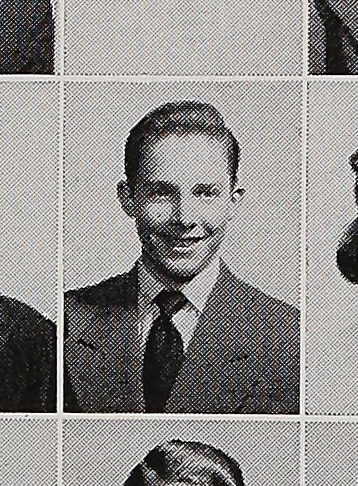
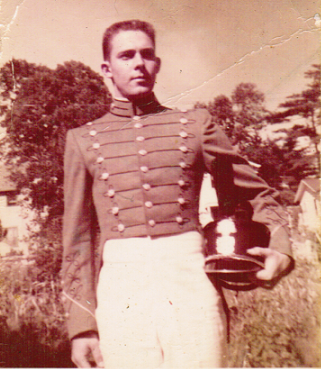
Charles Eugene Trantham at 15 Lee Edward High School 1951
My father died last December.
I typed that, like, two minutes ago and just sat there waiting for some other thought to come into my head. But nothing did.
After my mother died, I wrote As My Mother Lay Dying fairly quickly. There were a lot of feelings there to work through. A lot of confessions to be made. Not so much with my father.
As with my mother, I hadn’t seen my father in years. More years than with my mom. My father wasn’t always trying to get us together. He did occasionally, but not like my mother. My mother had to be involved in her children’s lives. Not my dad.
My mother and brother called my dad “the fog.” I called him “the shrug.” He shrugged a lot. It was how he escaped accountability. Not that my father did anything to hurt me like my mother did. But he had his ways of cutting deep.
My mother was the narcissist and he was her ally. He divorced her sometime in the early 80’s and apparently told her that awful thing that men sometimes tell women they’re leaving—“I don’t think I ever loved you.”
So, my father wasn’t without cruelty. And he liked to cloak his cruelty in reason, which is probably where I get my rationalizations from.
I remember years ago, my dad called me, probably on my birthday. He told me he’d like to see me. He said, “I need a hug.” I remember thinking, “You need a hug! Where were my hugs?”
That’s my parents in a nutshell. They didn’t hug me, or tell me they loved me, or tell me anything good about me, or guide me through life, except for the occasional stupid witticism people nowadays pass around as inane memes. They never showed me compassion.
But once they were old and feeble, they expected those things from me.
And my response, as the scapegoat, was, fuck you.
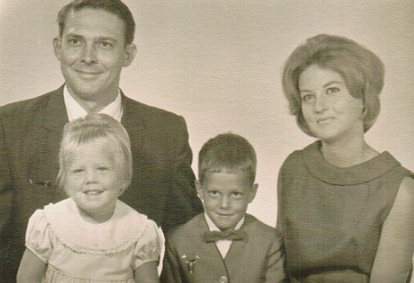
Dad and me, my brother, and my mom About 1963
There’s a caveat to that…the part about the hugs. With my mother, the older she got, the more she wanted to hug me. When we said goodbye, mostly. I was really uncomfortable with it. I dreaded it. When you grow up without hugging, being hugged as an adult isn’t natural. I don’t know if my mother needed the hugs, or if she thought she could “mother” me at that time, after all that had occurred between us.
With my father, unfortunately, the hugs and kisses were downright creepy. After he divorced my mother, he left the United States and lived overseas for a while. He married, divorced, and married again.
When I was getting married, he came home to walk me down the aisle and never left.
And when he came back, he was suddenly very physical. He wanted to kiss me on the lips and pull me into bear hugs that lasted too long. If I’d grown up with that, it wouldn’t have felt odd at all. But because I’d grown up rarely being touched by my parents, this was bizarre and horrifying to me.
And it was clear that my father had a problem with social mores and lines. When I first introduced him to my husband (then fiancé), we were at his little apartment with his third wife and their new baby. He asked us if we wanted to watch a “porno.” Who does that? I can’t even fathom what he must have been thinking. Did he really imagine we were all going to sit there and watch pornography together?
1956 at age 20 My dad, the college drum major
The last time I saw him was at a family gathering at my house. He was sitting in a comfy chair and when I walked past, he grabbed me, pulled me down onto his lap, and held me there. I was a grown woman with three children and he had me on his lap like a child. I got up as quickly as I could, but I was really embarrassed.
The guy was creepy, and I was uncomfortable around him.
I did have plans to see him last year.
He called me and asked me to come. I think he knew he wasn’t going to live much longer. He’d asked before, now and then, and my brother saw him often and invited me along a few times. But every time I thought about seeing him, I just couldn’t get past the overwhelming discomfort at the idea.
But I guess I figured it was time. I saw my mother before she died, so I could handle seeing my dad. My brother and I were scheduled to visit in early December. But my dad’s ex-wife, whom he lived with, and his son, my half-brother, got sick. With colds, I think. So we postponed it to the next Saturday. But on the Friday before, my dad had a stroke and couldn’t speak. And early the next morning, he was gone.
My brother called to tell me the news and I told him I was so sorry—I was comforting him. At some point, my brother noted that I wasn’t crying. I waved it off and said I’d cry later.
But I never did.
I’m not a cold person. I cry at movies. My god, if the first two minutes of UP! don’t make you cry, you’re a monster. I cry at hurt animals, or children. I cry at memories all the time. So much so that for a long time I made myself psychologically unwell by trying to push away terrible memories and had to learn to accept them, to live with them. I cry at the news. I cry when I’m sad.
But I didn’t cry when my parents died.
I think there are two basic reasons for this.
First, I came to terms with the relationships long ago. I realized what was broken, or never formed. I understood that the bonds most people have with their parents weren’t there for me. They were just people.
With my mother, she was a person I didn’t really like, who didn’t like me.
With my dad, he was a guy who loved me, and I loved him…in a distant, long ago way. I loved the idea of him that I’d tried hard to hold on to, but that just wasn’t real.
I felt sorry for my parents. But we were simply not close.
And second, I said goodbye to them long before they died. I knew that one day they would be gone and I sometimes asked myself if I was okay with how things were. Would I regret not trying again to have some kind of relationship with them? Each time, I decided I was okay. I knew that, intellectually, I had come to terms with it all. And if I did have regrets, my reason would remind me that I made the decision that was best for me at the time.
I do cry once in a while now. But it’s over what I never had, or some tiny memory of something good between us. I don’t mind a few tears now and again. But I can’t spend my energy on what might have been.
I promise, this is my last post about The Marvelous Mrs. Maisel. And let me say from the start that this is one of my favorite shows. I love it so much that these things the show got wrong really bother me. So let me just get it out of my system and then I can move on to what’s wrong with the rest of the world.
Let me know if you spotted anything else. It’ll give me more reasons to re-watch the show.
1. Strangers in the night…
Who the hell are those strange people at the Weissman family table in the first episode? Now, I get it, I suppose. The first episode is called “Pilot.” So, are we to assume this was a true pilot, like back in the old days when they put it out there and if people liked it, the network picked it up and went with it? If so, then I guess they didn’t think too far into the future and cast all of the parts.
But, I’m not completely ready to buy that.
In the scene, Miriam Maisel, played by the wonderful Rachel Brosnahan, is giving a speech at her wedding four years prior to the main storyline. At the table behind her are the Weissmans, played by Tony Shalhoub and Marin Hinkle, and Joel, Miriam’s husband, played by Michael Zegen. Then there’s some random dude and two other older people, along with the Rabbi.
Those other people must be Miriam’s brother Noah, and Joel’s parents, the Maisels. But the actors are not the actors who portray those parts in the series. And where is Astrid? Astrid, played by Justine Lupe, says, in an early episode, that she and Noah have been trying to have a child for seven years. So, why wasn’t she at the wedding that took place four years prior to the main timeline of the show?
2. “We got the bastard!”
The angry lady at the deli in Episode 1 is the same actress who plays Edie (Barbara Miluski) later in the show at the Catskills. Oops. Suddenly we are synagogue and Catskills pals with the “You like your free pork chops?” lady in the deli!
3. We want latkes, people!
Baz, played by Erik Lochtefeld, asks for latkes from Miriam for the next week, when she comes into the Gaslight Café. But she brings another brisket instead and he doesn’t say anything. This bothers me.
4. “But, do you love it?”
The end of Episode 1 leaves you believing that Miriam is actually considering a career in stand-up when she bails Lenny Bruce, played by the amazing Luke Kirby, out of jail and asks him if he loves the work. But by the time Susie Myerson (played by the one-and-only Alex Borstein) shows up at her door later that day, she’s suddenly against it again. This is a bait and switch to keep that particular conflict going. Bad form.
5. Ragdoll down and shake it out, ladies!
Okay, this one is a little silly, but it definitely bothers me.
In Episode 1, Midge (aka Miriam) walks around all night after getting drunk and taking the stage at the Gaslight–the night before Yom Kippur. Later that morning, she’s changed her clothes and bails Lenny out of jail. In Episode 2, she’s at exercise class–the morning or afternoon of Yom Kippur. She’s supposed to be fasting (though she did nibble on some stuff during the night, so maybe she just gave up on all of that), she got so drunk the night before she doesn’t remember flashing her boobs to an audience at the Gaslight, and she hasn’t slept–when could she possibly have slept? But she’s at exercise class?
6. “She dressed for the meeting”
In Episode 3, at the lawyer’s office, Midge says that she and Joel met a co-op board, presumably for their apartment. But apartment buildings in Riverside didn’t go co-op until many years later.
I admit, the only reason I know this is because I didn’t know what the hell she was talking about. What’s a co-op board? So I looked it up and found out that juicy tidbit of a-historical story writing. You’re welcome.
7. “We’re going to the Catskills!”
In Season 2, Episode 4, Pauly, played by Saul Rubinek, tells Midge that in the Mrs. Steiner swimsuit pageant, the winner is always escorted by her husband, and so, as Midge and Joel are separated, it would be awkward if she won. And as she’s won every year she entered, it would be best if she were sash girl instead of a contestant.
And yet, there stands Midge in the competition with the sash ready to drape the new Mrs. Steiner Swimsuit and what do you know? There’s no husband to be seen. And nobody says anything about it. What the hell?
8. “Are we still on for tonight?”
In Episode 7, Joel is at the dress factory and confirms a date that night with one of the girls who works there. But that night is the party celebrating his purchase of the building. And later that night, he’s bombed and there are a few girls hanging around needing cab fare from Archie, Joel’s best friend played by Joel Johnstone. None of the girls look like the one he had the 10 o’clock date with. What happened to her? Maybe she went home pissed that he didn’t take her anywhere, but it’s not like she didn’t know there was a party happening. It’s just muddled writing.
9. Jabberwocky, m’ dude…
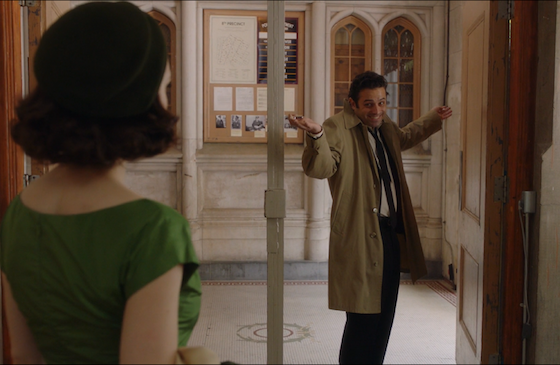
In that same episode, Declan Howell, played fabulously by one of my fave actors Rufus Sewell, tells Midge to tell Benjamin (her love interest at the time, played by the great Zachary Levi) to pick out a piece of art and leave a check. But don’t tell him where he lives or Declan will go there and take it back. Declan was an odd artist who didn’t really like to sell his work.
So…did checks not have addresses on them in the late Fifties?
10. “It’s not really about where you shop, is it?”
In Episodes 9 & 10, Benjamin shows up at the park and meets Ethan, Miriam’s son. She tells him that he shouldn’t have come because she hasn’t cleared it with Joel. And Joel is really pissed off about it when he finds out. But, hold on!
Earlier in the show, I don’t remember when, Joel gets a place to live and asks to have Ethan over to spend a night. He says he’ll pick Ethan up, but Midge is running late and doesn’t have Ethan home in time, so she calls Joel’s office to get his new address only to find he’s living with Penny Pann, the woman he cheated on her with. Penny is played by the lovely Holly Curran.
So, you’re telling me that Joel was going to have Ethan for a sleepover at Penny’s house without Miriam knowing about it, but is pissed off that Benjamin shows up at the park and meets Ethan? And Miriam doesn’t say anything about that when he’s bitching at her about it?
What the bloody hell?
11. “Nobody’s gonna tie you up”
In Season 3, Episode 1, Joel rents out a space for his nightclub and says the price in the contract is locked in for five years. But later, Mae, played by the amazing Stephanie Hsu, says her parents are going to raise the rent the next year. Huh?
12. “I had a close friend, and I never knew it”
In Episode 2, Susie is in her tiny one-room apartment. Jackie, who works with her at the Gaslight, played by the beloved and late Brian Tarantina, is there because she’s subletting the apartment to him while she’s going on tour with Midge. Jackie’s in the bed. The thing is, Susie’s apartment is so small that when the Murphy bed is pulled down from the wall, you can’t open the door. When Susie wants to leave, she tells him he has to get out of bed. But he says he’s naked under the covers.
So many questions. He couldn’t have been in bed when she arrived, because he’d have had to get out and get dressed to push the bed back up and let her in. How could he have gotten into bed naked while she was there, without her knowing about it? But we know that he must have already been in the bed when she arrived because he tells her that Midge called an hour ago and woke him up. If Susie had been there when Midge called, she would have answered the phone herself and not had to get the message from Jackie.
So, the scene is logistically impossible.
Sure, it’s funny. But the illogic of it just spoils the whole thing. Poor writing there.
13. “Cherry, orange, cherry. That shoulda been somethin'”
This one’s long.
In Episode 3, in Las Vegas for the Shy Baldwin tour, Reggie, Shy’s manager, played by Sterling K. Brown (Shy Baldwin is played by Leroy McClain) says the tour is going to LA, San Francisco, Chicago, and then Miami. Angie Calibresi, played by Lenny Venito, is a mob boss who owns the Las Vegas hotel they’re staying and performing at.
The bass player, Carole, played by Liza Weil, tells Miriam they will get together soon and she’ll “explain the rules of the road” to her.
Then, in Episode 4, they’re still in Las Vegas. They’ve been there for about two weeks, because Midge gets her first paycheck from Angie and Susie says it’s two weeks’ pay. Joel goes to Vegas to visit and Angie is still there so we assume it’s the same hotel and casino that Midge was in at the beginning of their Las Vegas stint.
In the next episode, they’re suddenly in Miami and Midge and Susie mention a bunch of places they’ve been on this tour. LA is mentioned. But it’s not until this episode that Carole invites Midge to her room for drinks and the “rules” talk. It’s played like this is the first time they’ve gotten together and the first time they’ve discussed this subject. So, months later, they finally get together? I guess…
14. “Same heart attack, different afterlife”
I admit, this one’s just nitpicking.
In the last episode of Season 4, Midge plays the Apollo. And on that night, Susie and her sister Tessie, played by Emily Bergl, burn down their deceased mother’s house for the insurance money.
The next night, so 24 hours later, Miriam and Susie show up at the airport and find that they are booted from the tour just before they’re supposed to leave for Europe. Susie and Midge spend that night at the Gaslight. The next morning, Miriam tells Susie she needs all of the money that she’s made so far because she made a deal with her former father-in-law to buy back her old apartment and when he finds out she’s been fired, he’s going to want more money up front right away.
Susie calls Tess, and Tess says the insurance guy said the check would be ready that day.
What? The insurance money is coming through less than 48 hours after the house burns down? Okay, sure, we do find out that the check isn’t really ready and that might have been a lure to get Susie and Tess down to the agency so they could be questioned about the fire.
But Susie and Tess really thought the check would come through that quickly? Something’s weird about that.
15. “It’s tough being a woman in journalism”
In Episode 6, Miriam unwittingly and stupidly gives L. Roy Dunham, played by Hari Nef, her maiden name. Not only does it not make sense for her to do that, it sets up a situation in which the public will find out that Miriam is Rose Weissman’s daughter, causing problems with Rose’s biggest matchmaking client.
But this storyline is dropped, almost certainly because the creators decided to do only one more season and rushed everything to a somewhat unsatisfying end. See The Problem with the Marvelous Mrs. Maisel Finale.
Update to add another one!
BONUS #16.
In Season 3, Episode 1, Miriam and Susie arrive at some army place for a show. Susie complains that Miriam is always late. They were supposed to be there at noon and it was 12:30. But Midge says that as long as she’s there when they call her name, she’s on time, as far as she’s concerned. And when they are getting out of the jeep, she says, “See, still tapping!” referring to the girls on stage dancing.
As they are escorted to the stage, an army dude is giving Midge instructions on what to do. She’s to walk across the stage, wave at the troops, and then exit on the other side. And she says, “This isn’t my set?” No. This is just the intro to all the performers in the show.
So, Midge arrived in her cute little army-esque outfit thinking she was going right on stage to perform, right? And yet, after the intro to all the performers, she and Susie are sent to the dressing rooms where she puts on her show outfit.
Now, you could argue that Miriam was simply willing to perform in her traveling outfit, but I’m not buying it. If she thought she was supposed to go on as soon as she arrived, she’d have either arrived in her performance dress, got there in time to change, or she’d have been complaining about not having time to change and insisting she get to do it.
The last thing I want to say is that I’ve read a few opinion pieces about the show. Some people gripe about Midge being a terrible mom, and I’m like, would you say that about a man trying to make a career out of standup? And the show is about the costs of success for a woman in the late Fifties. I think the show did a good job in the last season of giving us a glimpse of how Midge’s relationships with her children turned out. And let’s face facts, people. Great parenting isn’t all that funny.
But one guy, I don’t remember who, complained about the final episode in which Miriam walks through her enormous penthouse apartment all alone. If I recall correctly, he was uncomfortable with that vision, of Midge having all that success only to end up alone. I think I commented on his article, saying he should re-watch the show. Midge’s sacrifices for her career were foreshadowed throughout.
But, more than that, her enormous banquet table is set for guests–a lot of them. Midge is wealthy and yes, lives alone, but the finale doesn’t make it out like she’s lonely, or that she’s regretful, or hasn’t had a wonderful life. She spends time with family, judging by her hopes of being in New York for Christmas, and she obviously has a lot of friends. Best of all, she spends plenty of phone time with her very best friend, Susie.
So, overall, despite these quirks and errors, and the complaints of a few, The Marvelous Mrs. Maisel is fabulous. And I’ll definitely watch it again and again.
The thing is, no matter what people tell you, no matter what you do, you might not succeed.
Everyone out there telling you how to succeed–Just keep submitting to corporate publishers or agents! Persistence is the key! Stay in one lane! Write to market!–is either suffering from survivor’s bias or spouting what the survivors have told them because they do believe in fairies, they do believe in fairies, they do, they do, they do believe in fairies.
Well, I don’t.
So, I’ve decided to give up.
Hold your panties, there, I’m not giving up on writing. In fact, from your perspective, I’ll bet nothing is going to change at all.
What I’m giving up on is the nagging and the guilt and the frustration–all of these things are coming from inside of my own head and I’m sick of them. If I don’t feel like writing fiction, I’m not going to do it. That’s all there is to it. But lucky for me, I do often feel like it, so I’ll probably produce the same amount as usual. I’m just not going to beat myself up for sewing instead.
I made a list of all the things I want to do–the things that make me happy. Writing, Puzzle Books, Sewing, Photography, Cooking, Online Classes, & Crocheting/Knitting.
Those are the things I like to do. And I’m not going to push any of them aside anymore trying to make myself a successful author. I’m just going to be me.
You know what they say about best laid plans…
I must have been pretty open about my frustration with writing because this whole idea of just doing other stuff and not feeling guilty about it led to a pretty big fight with my husband. And we don’t really fight. We’re fumers. Fume and breathe, fume and breathe, and eventually everything goes back to normal.
But after several months of fuming and bickering and then a nice real fight, I have decided that I’m nuts.
When I said that from your perspective nothing would change, I meant that I had already been at a low point for at least a couple of years and I wasn’t really writing much, anyway. And that just wasn’t working for me. I’d decided to give up worrying about it.
Well, here it is July and giving up worrying wasn’t working for me, either. So, I’m going back to writing full time. I’m not completely sure I ever really wrote full time. Even when I had that office space downtown. But I’m determined to do it this time.
I watched the final episode of The Marvelous Mrs. Maisel Season Five just before leaving for vacation. So I had plenty of time to think about it. When I got home, I binge-watched the entire season again. I have to say, it was much more funny and rewarding the second time through. On first viewing, the season felt rushed and lacking in the humor we’ve come to expect from the show. But the whole season makes much more sense, runs smoother, and had a lot more laughs when it can be viewed without having to wait a week between episodes.
Don’t ask me why.
Overall, The Marvelous Mrs. Maisel is some of the best programming on television right now. That being said, I’m probably going to write another blog post about all the problems with it. Silly things that don’t matter, like the scene in which we find Susie in her apartment with Jackie. Jackie’s in the bed and Susie can’t leave while the bed is down–it blocks the door. Jackie says he’ll get out of bed so she can leave, but he’s naked under the covers.
What the hell? How did Jackie get in the bed naked while Susie was in this tiny one-room apartment? Had Jackie already put a curtain or door (got to watch it again) on the bathroom entrance? We’re supposed to believe that while Susie went to the bathroom, Jackie pulled the bed down, stripped, and got between the sheets? How did he expect Susie to leave?
I know, I know. They played the scene for laughs. And it was funny. But it also made no sense. Stuff like that bugs the shit out of me and I’d like nothing more than to re-watch the entire series just to make note of all those nit picks and write about them.
But not this time.
This time I want to say that, while the final season was really good–maybe not as great as the rest of it because, well, it really was rushed just a bit–it missed one really big thing: closure. On two fronts.
Sure, we should have gotten a bit more about Ethan and Esther. The writers just threw us a few bits about their adulthoods as if that was enough. There should have been just a tad bit more. Just a bit, if you please.
And yes, we absolutely should have gotten a bit more on the whole Abe and Rose dying. Not to mention Lenny Bruce, whose death they passed over completely.
I can forgive those things.
What I can’t get over yet, though, is that the show, for some odd reason, brought back Midge’s one-night stand so he could explain and apologize only to disappear again, but didn’t bring back Benjamin. What the fuck?
This is insanity. Benjamin should have been in the final season in some capacity, if only somehow being in the audience for Midge’s big break on The Gordon Ford Show. Some closure between them would have been fabulous. And it was necessary!
The other bit of closure is with Sophie Lennon. How grand would it have been if, instead of Alfie showing up side-stage for Midge’s big break, it had been Sophie Lennon? Her look of shock, jealousy, and then, perhaps, a mature realization of, and respect for, Midge’s talent–if only a tiny bit–would have been splendid.
I wouldn’t have minded a scene in which Lenny Bruce somehow witnessed Midge’s big break, too. But I understand that would have been tricky. I assume the show was taped, not live. And the flashback following the show scene with Lenny and Midge was wonderful. Perhaps that was enough.
But none of that happened. No Benjamin. No Sophie (except for an unnecessary bit earlier on). No Closure.
I started a new class this morning with The Great Courses. I’d been trying to listen to a class on The Federalist Papers for a long time and, I’m sorry to say, it was just so boring! So I switched to a class on England, the Beatles, and the 1960s. The first lesson was a real winner.
I learned, for example, that George Harrison visited his sister in Benton, Illinois in 1963. At the time, the Beatles were all the rage in England, but pretty much unheard of in America. Certainly in Benton no one knew who George was.
But I also learned that before the Beatles ushered in the British “Invasion,” the top song on the charts in America, for five weeks no less, was Sugar Shack, by Jimmy Gilmer & the Fireballs. So, after my lesson, I headed over to YouTube for a listen.
I was unimpressed. But the worst part of it was that Jimmy sang the line “There’s this cute little girlie, she’s a-workin’ there; A-black leotards* and her feet are bare.”
*The official lyrics claim he’s singing it this way: “There’s this cute little girlie, she’s a-workin’ there. A black leotard and her feet are bare.” But in the song you can just make out a plural in “leotards” and when you hear the story of how this song was written, you know he’s saying “a-black” in the same way he said “a-workin’.”
Keith McCormack wrote the song with help from his aunt, Faye Voss, over coffee one morning. You can hear him talking about it in The Story of SUGAR SHACK – “We’ve given it a signature!” by Peter Beamish. He says, “I couldn’t remember what you call those tight pants girls wore at the time, so I asked my Aunt Faye and she said ‘leotards.'”
Before I get into it, did you know that the leotard is named after 19th-century French acrobat Jules Léotard?
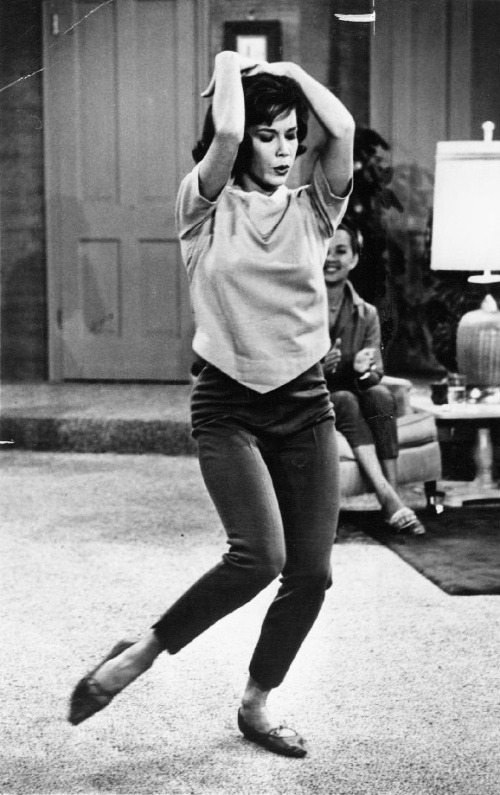
Anyway, I listened to the entire video about the making of “Sugar Shack” and I’m sorry to say that not once was the error of “leotards” addressed. Leotards are bodysuits, mostly worn by dancers. I can assure you that the waitress in the Sugar Shack wasn’t wearing leotards. She was wearing tights, or more likely 1960’s style peddle pushers. Think Mary Tyler Moore in The Dick Van Dyke Show.
Oh, Rob!
I’m baffled as to why no one noticed that McCormack used the wrong word. Even Wikipedia doesn’t seem to realize it’s wrong.
What the hell is wrong with the world?
Anyway, another top song in 1963 was Sukiyaki by Kyu Sakamoto. A much better song than “Sugar Shack.” And luckily for me, it’s in Japanese, so I have no idea if it has any egregious errors in it.
Sakamoto was only twenty when he sang “Ue o Muite Arukō.” Naturally, the name was changed to “Sukiyaki” because English-speaking people are stupid. Why didn’t they change it to a translation? Like, “I Look Up As I Walk,” which is what it translates into? Why Sukiyaki? Do you know what sukiyaki is? It’s a meat dish and has absolutely nothing to do with the song.
Anyway, what a lovely morning of music and history.